 Vitalbodybalance
Veneer Patching and Marquetry Consolidation
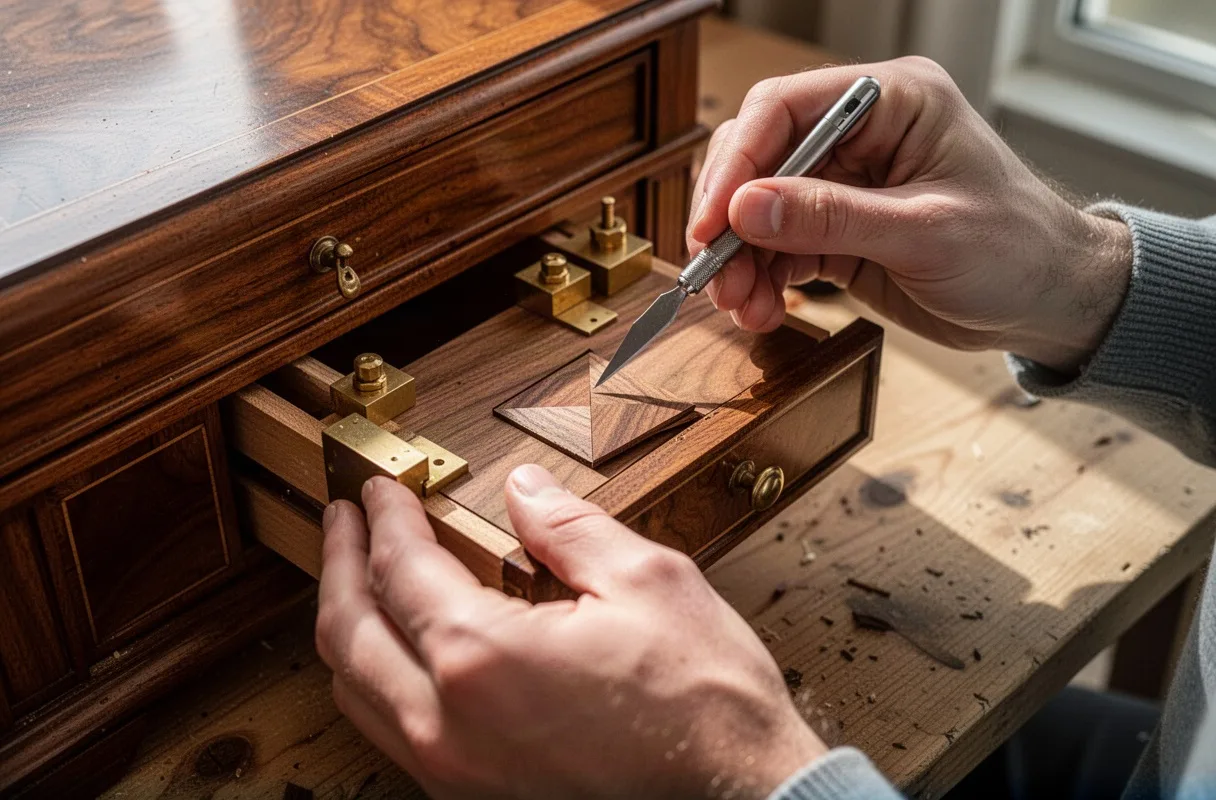
Designed for antique chests, credenzas, and tables suffering from missing chips, lifted edges, or air blisters beneath timber skins. We inject warm hide glue beneath unbonded sections, press them flat with heated caul blocks, and source age-matched veneer specimens to fill lost sections. The resulting patch is grain-aligned and colour-toned to merge with adjacent wood.
What is included
- ✓Sub-surface glue reactivation using moisture and heat
- ✓Precision injection of animal hide glue into blisters
- ✓Clamping using custom-radiused cork and timber cauls
- ✓Grown-grain wood sourcing from vintage veneer stock
- ✓Bevel-cut invisible patch fitting
- ✓Local pigment toning and touch-up finishing
Submit a Repair Inquiry
Your details are used solely to assess the timber piece and return a price estimate.
Our Restoration Process
-
1
Blister Assessment and Adhesive Delivery
Hollow-sounding areas are mapped, slit along grain lines where needed, and injected with liquid hide glue.
-
2
Caul Pressing
Heated timber blocks clamp the veneer under uniform pressure until the bond support flat.
-
3
Patch Inlay and Colour Blending
Missing segments are hand-cut from grain-matched donor veneers, glued in place, and colour-matched.
Questions about this service
Why do veneer surfaces blister and rise?
Original animal glue becomes desiccated over decades in dry, centrally heated rooms, releasing its grip on the substrate.
Will the repair patch be noticeable after completion?
By matching grain orientation, timber porosity, and applying hand-mixed earth pigments, the patch blends naturally under room lighting.
Do you need to strip the whole piece to fix one blister?
No. Veneer consolidation is done locally, preserving the existing finish across undisturbed areas of the furniture.
Request an Assessment for Your Wooden Furniture
Send us two clear photographs of your damaged item or call our workshop directly. We provide a firm quote or diagnostic reply within one business day.